

Introduction
There has always been a strong link between music and social media, but few phenomena have shown that link as creatively as Instafest Spotify. People who love music have been looking for new methods to show off their tastes, not just through playlists but also through pictures that convey a story. This new idea turned listening data into something that seems personal, artistic, and like a celebration. Instead of just providing a list of songs or artists, it shows a user’s music tastes as a full-size festival lineup poster.
The appeal comes from how simple and heartfelt it is. Even if they’ve never been to a live show, music aficionados are naturally drawn to festival culture. The thought of watching your favorite bands as headliners, mid-tier performers, and up-and-coming groups is something that many people have in mind when they think of the ultimate music festival. This is where Instafest Spotify found its fans. It made private listening habits into a public identity, which connected data with self-expression.
What is Instafest Spotify, and why Did it Become Popular

At its core, Instafest Spotify is a digital experience that looks at a user’s Spotify listening history and turns it into a festival poster that looks good. The poster looks like real music festival lineups, with big letters and names of artists in tiers. The more people listen to an artist, the higher they are on the list. This gives users a sense of hierarchy based on their own behaviors.
Instafest Spotify quickly became famous because it fit in so well with social media culture. Instagram and other platforms do well with pretty pictures and personal stories. A festival banner that shows what kind of music someone likes does both. It feels special, personal, and important to me. People weren’t just sharing a picture; they were revealing a part of who they were.
Timing is another reason why it has grown. Music streaming services already give yearly summaries, but they only cover certain times. Users could make anything new at any time with Instafest, which made it feel more collaborative and spontaneous.
The Idea of Music Festivals in the Digital Age
For a long time, music festivals have stood for freedom, creativity, and community. Even people who have never been to a live festival know how important the names, headliners, and poster designs are to the culture. Instafest Spotify smartly took this cultural language and turned it into a digital form.
In the digital world, things don’t have to be genuine to feel real. People now listen to music in a different way because of online festivals, livestream concerts, and virtual events. Instafest Spotify fits well in with this change by giving them a festival experience that is only available online but yet has emotional significance.
The format of the lineup is quite important. Seeing your favorite musicians together makes you think of an event that feels planned and managed. It lets people picture what it might be like if the way they listen to music affected a real-life event.
How Instafest Spotify Works Behind the Scenes

Knowing how Instafest Spotify works makes it even more interesting. The first step is to get a user’s Spotify listening data with their permission. This information shows the most popular artists over a set period of time, like the last several months or longer listening periods.
After the data is gathered, it is sorted by how often people listen to it and how engaged they are. Artists with the most plays are at the front of the lineup, and those with fewer plays are at the bottom. This structure looks like real festival posters, which makes the design look even more real.
The end result is a poster that looks good and shows both your taste in music and how you listen to music over time. The method does not put artists in random order. It makes sense, which makes the result feel right and personal instead of generic.
What Aesthetics Mean for Instafest Spotify
One of the main things that makes Instafest Spotify stand out is its visual style. The posters are simple but strong, with clean typography and even spacing. This design choice keeps the focus on the artist names, which are the emotional heart of the picture.
The layout is similar to that of well-known festival posters, which makes it easy to recognize. The style still gets across the sense of a music gathering, even without logos or branding. This familiarity makes people want to interact with the image, even if they see it for the first time on social media.
Color schemes are also quite essential. Different themes make the site feel more personalized, while subtle backgrounds make the text stand out. These visual elements turn raw data into something that looks more like art than science.
Why Music Lovers Feel Emotionally Connected to Instafest Spotify
Music is very personal and often linked to memories, moods, and who we are. By showing music choices in a fun way, Instafest Spotify taps into your emotional connection. It doesn’t present numbers; it shows a story.
Seeing a favorite artist as the main act is a sign that they have good taste for a lot of people. Even if it comes from an algorithm, it seems like recognition. The lineup shows who they are, how they feel, and how they hear the world around them.
People can show who they are without saying a word by sharing this poster. Friends can tell right away what kind of person someone is by looking at the artists they like. This emotional shorthand works well in digital areas because people don’t pay attention for long.
The culture of sharing on Spotify and social media during Instafest
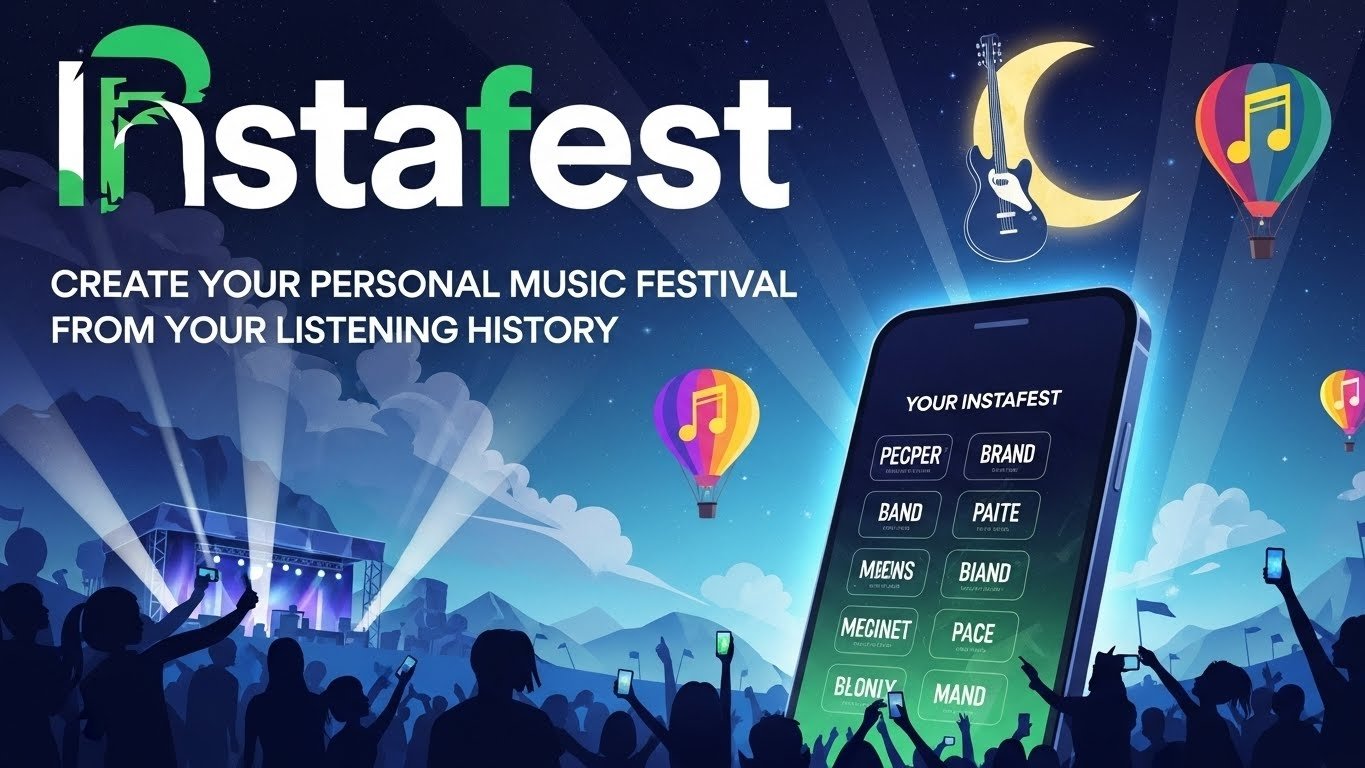
Social media works best with information that is personal, interesting to look at, and easy to understand. All of these things are true for Instafest Spotify. The posters are made to be shared and fit seamlessly into feeds and tales.
Sharing also opens the door to conversation. Friends talk about artists they both like, compare lineups, and find new music by looking at each other’s posters. This interaction turns a still picture into a social event.
Relatability is another key thing. Even people who haven’t made their own poster can see the value in the format. The premise of the event is something that everyone can enjoy, thus the content is not just for diehard music fans.
Comparing to Other Music Data Visualizations
Music platforms have tried many different ways to show listening data. Charts, playlists, and year-end recaps are widespread, but they frequently seem more like information than beauty. Instafest Spotify changed the focus from data to stories.
It gives you hierarchy and symbolism instead of numbers and percentages. The idea of a headliner has more emotional weight than a number. This distinction is why a lot of people thought Instafest was easier to share than regular summaries.
The table below shows how Instafest Spotify stacks up against other popular music data formats.
| Feature | Instafest Spotify | Traditional Music Summaries |
|---|---|---|
| Visual Appeal | High festival-style design | Mostly charts and text |
| Emotional Impact | Strong personal connection | Moderate analytical insight |
| Shareability | Very high on social platforms | Limited to specific seasons |
| Customization | Based on personal listening | Often fixed formats |
How Instafest Spotify Affects Finding New Music
Instafest Spotify is mostly about self-expression, but it also helps people find new music. When people share their posters, they show other people artists they might not have known about before.
Seeing an unknown musician as the main act makes me want to know more. It makes people think about why that artist is important to someone else. This makes Instafest a tool for making indirect recommendations.
This organic discovery seems more real than suggestions made by algorithms. It is based on human connections instead of automatic playlists, which makes people more likely to trust and be interested.
Choosing a Time Range and Customizing
One of the best things about Instafest Spotify is that it is flexible. People can typically choose how long they want to listen, such the last few months or a longer period of time. This choice changes the lineup, letting users show off different parts of their musical journey.
Someone might make a lot of posters that show how they feel or what was going on in their lives at the time. Although they are all based on the same foundation, each poster tells a different story.
This adaptability makes people want to use it again. Not only do users come back once, but they come back several times, trying out different options to see how their lineup changes.
Why people of all ages like Instafest Spotify
Even while social media trends tend to favor younger people, Instafest Spotify is popular with a wider range of people. The idea of a festival is something that people of all ages can relate to.
Older consumers like seeing their favorite performers from the past in a big way. Younger people like how modern it looks and how easy it is to share. The design brings people of all ages together by concentrating on their shared love of music instead of trends that are particular to one age group.
The fact that so many people like it helps the trend last longer. It doesn’t just appeal to one group of people, which is why it stays relevant longer than other viral content.
The Psychology of Festival Lineups

Festival lineups are more than just lists of musicians. They show status, popularity, and cultural importance. Instafest Spotify uses this psychology by giving listening habits a symbolic significance.
Seeing an artist at the front of a lineup makes you feel more connected to them. It feels like a public promise of commitment. The poster was made by a computer program, but the feelings it brings up are real.
This psychological effect shows why people are proud to share their posters. It’s not just about music; it’s about who you are and where you fit in.
Privacy and Ethical Issues
Privacy concerns arise with every tool that utilizes personal data. Instafest Spotify works by getting permission from the user to look at their listening history, which is a very important part of trust.
Users still have control over what they disclose. The banner lists the names of the artists but doesn’t give any specific information on how many times the songs have been played. This balance between privacy and customisation makes users feel more at ease.
Trust is built on openness and permission. The emotional attraction of the encounter would be lessened without them.
How Digital Music Expression Has Changed
The way people talk about their relationship with music is changing in a bigger way than just Instafest Spotify. Listening is no longer something that people do alone. It has turned into a way for people to talk to each other.
Music is becoming an element of digital identity, from playlists to tales to festival posters. Instafest is a part of this change since it gives people a new way to express themselves through music.
As technology keeps changing, similar ideas may come up, but Instafest Spotify is still a great example of how data and creativity can work together.
The Cultural Impact of Instafest Spotify
Some trends stick around for a long time, while others don’t. Instafest Spotify has changed the way individuals talk about their music tastes. It proved that data doesn’t have to be dull or impersonal.
It transformed how people thought about listening habits by framing them as a celebration instead of a report. People today want experiences that are more than just instructive.
This change in culture goes beyond music. It shows a larger need for digital tools that put creativity and emotion first.
Instafest Spotify: Ideas for the Future
Instafest Spotify’s success paves the way for new ways to express yourself online. In movies, novels, or video games, similar ideas could come out that use personal data to make shareable visual narrative.
The most important thing to remember is to find a balance. People like it when technology respects their privacy and lets them personalize things in a meaningful way. Instafest did a good job of finding this balance.
As digital culture changes, this trend will probably have an effect on new ideas in the future.
Conclusion
Instafest Spotify is not only a trend that goes viral. It shows how people connect with music, who they are, and their community in the digital age. It converted data into a party by turning listening habits into festival posters.
It works because it makes people feel something, looks good, and can be shared on social media. It let people see themselves via their music in a way that felt both private and public.
In a world full of content, Instafest Spotify stood out by giving people something simple but effective. It reminded people that music isn’t simply something we hear; it’s something we live, share, and show off with pride.
Read More:- Instafest App Guide: Music Taste, Features, Privacy, Trends